




Gum Graft Cost and Recovery: What to Expect in Oakville
Learn what affects gum graft cost, how the procedure works and what gum graft recovery looks like week by week, from our periodontal team in Oakville.
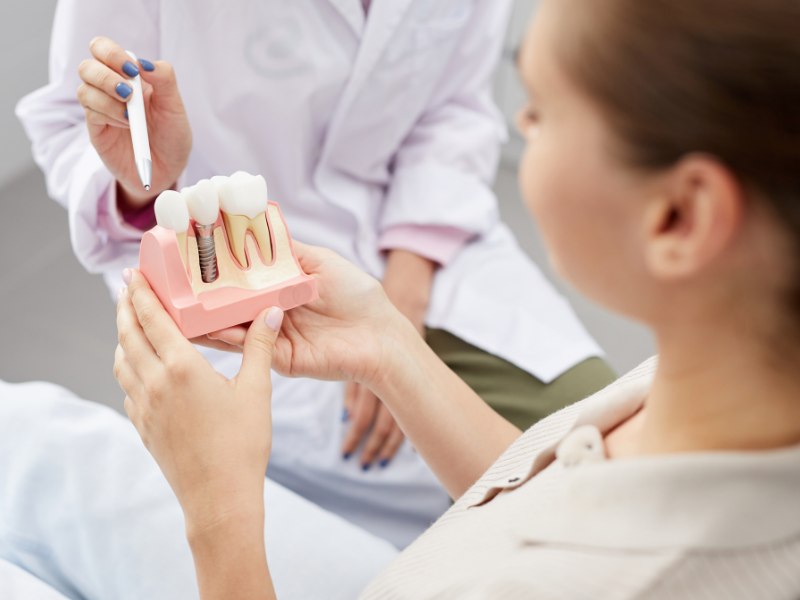
In Oakville and across Ontario, a dental implant with its crown generally costs from about $800 to more than $5,000 per tooth. That is a general range, not a quote. Your own cost depends on how many teeth are being replaced, whether you need extractions or bone grafting first, and the type of restoration placed on the implant. A consultation is needed for an accurate estimate.
Implants are one of the larger investments people make in their oral health, so it is reasonable to want a clear picture before you commit. Below, we explain what you are actually paying for, why prices vary so much from one person to the next, how insurance usually works, and what questions to ask so you can compare options fairly.
A single-tooth implant is not one item but a small series of steps and parts. When you see a price, it helps to know which of these are included.
Your dentist will review your medical history, check the health of your gums and nearby teeth, and talk about your goals. Gum disease, untreated cavities or a heavy grinding habit can all affect how an implant is planned, so this first visit matters. It is also when you learn whether an implant is a good fit for you at all.
Implants are placed in bone, so your dentist needs to see how much bone is available and where nerves and sinuses sit. Planning usually involves digital X-rays and a 3D scan of the jaw. Digital impressions with an iTero intraoral scanner can also be used to record the shape of your teeth and bite without traditional impression trays.
Some quotes cover only the surgical placement of the implant and price the abutment and crown separately. Others bundle everything. Neither approach is wrong, but you need to know which one you are looking at before comparing numbers.
The wide range exists because no two mouths are the same. These are the factors that usually make the biggest difference.
Replacing one tooth needs one implant and one crown. Replacing several teeth in a row does not always mean one implant per tooth: two implants can sometimes support a three-unit bridge, which changes the total.
If the tooth being replaced is still in place, it has to be removed first. Depending on the site, an implant may be placed at the same visit or after the area has healed for a few months.
After a tooth is lost, the jawbone in that area naturally shrinks over time. If there is not enough bone to hold an implant securely, a bone graft may be recommended to rebuild it. Grafting adds cost and usually healing time, but it can make an implant possible where it otherwise would not be.
In the upper back jaw, the sinus sits just above the roots of the molars. If the bone between the mouth and the sinus is thin, a sinus lift (sinus augmentation) raises the sinus floor and adds bone underneath. This is a separate procedure with its own fees.
Healthy gums are important for implants. If gum disease is present, it is usually treated before an implant is placed. Our office includes Dr. Tina Kokosis, a certified specialist in periodontics, who focuses on gum health, gum grafts and implants.
A single crown, an implant-supported bridge and an implant-supported denture all cost different amounts. Material choices, and whether the crown is screw-retained or cemented, can also affect the fee.
For people missing all or most teeth in one jaw, a full denture can be held in place by a few implants instead of relying on suction alone. This often costs less than replacing every tooth individually, while giving more stability than a conventional denture. Your dentist can explain whether a removable (snap-in) or fixed design suits you.
Coverage varies widely. Some private dental plans in Canada now include implants as a major service, often with an annual or lifetime maximum. Others exclude implants but may pay toward the crown, or pay what they would have paid for a less costly alternative, such as a bridge or denture. Some plans cover nothing related to implants.
Here is how coverage usually works in practice:
Public programs work differently. The federal Canadian Dental Care Plan (CDCP) is for residents without access to dental insurance who have an adjusted family net income under $90,000, with co-pays based on income. Public programs generally do not cover implants as a routine service. Check current coverage details on the Canada.ca CDCP page before planning treatment.
A clear plan prevents surprises. Before treatment begins, it is reasonable to ask:
Our front-office team can walk you through these questions and explain your options for paying over the course of treatment.
It is natural to shop around, but implant prices are often not like-for-like. A lower number may leave out the abutment or crown, the 3D imaging, temporary teeth or follow-up care. It may also assume no grafting is needed before anyone has looked at your bone.
Planning also matters. Implants placed with careful assessment of bone, bite and gum health are more likely to function well over time. Problems such as an implant placed at a poor angle or a crown that overloads the bite can be costly to correct later. When comparing quotes, look at what is included, how the treatment is planned and who will be looking after you during follow-up, not only the bottom line.
Implants are not usually completed in one visit. A typical timeline looks like this:
From start to finish, many patients complete treatment in several months. Cases that need grafting or a sinus lift take longer.
With good home care and regular checkups, implants can last many years, often decades. The crown on top is exposed to chewing forces every day and may eventually need to be replaced, much like any crown. Implants cannot get cavities, but the gum and bone around them can become inflamed, a condition similar to gum disease. Brushing twice a day, cleaning between teeth and around the implant, and keeping up with professional cleanings at your preventive care visits all help protect your investment.
An implant is not the only way to replace a missing tooth, and it is not right for everyone.
Your dentist can talk through the pros and cons of each option for your situation, including how long each is likely to last and what it will need in upkeep.
Shore Side Dentistry is on Lakeshore Road East in downtown Oakville and has served the community since 1990. Many of our implant patients come from Old Oakville, Bronte Village and Glen Abbey, and others travel from Burlington and Milton along the QEW. Dr. Peter Taylor focuses on restorative, implant and prosthetic dentistry and is a Fellow of the Canadian Academy of Restorative Dentistry and Prosthodontics. Dr. Tina Kokosis, our certified specialist in periodontics, works with implant patients on gum and bone health. Visit our dental implants page to learn more about how we plan treatment.
No, implants are not generally free in Canada. Public dental programs, including the Canadian Dental Care Plan, generally do not cover implants as a routine service. Some private insurance plans pay part of the cost. Check Canada.ca for current CDCP coverage and ask your insurer about your own plan.
For many people, yes. Implants do not rely on neighbouring teeth for support, they help preserve bone in the area, and with good care they can last many years. Whether they are worth it for you depends on your health, budget and goals, which is what a consultation helps clarify.
The area is numbed with local anaesthetic, so most people feel pressure rather than pain during placement. Afterwards, mild soreness and swelling for a few days is common and is usually managed with over-the-counter pain relief. If you feel anxious about treatment, ask about nitrous oxide or other sedation options.
There is no single price, because full-mouth treatment can take many forms. Costs depend on whether you choose a removable implant-supported denture or a fixed bridge, how many implants are needed, and whether extractions or grafting are required. A consultation with imaging is the only way to get a meaningful estimate.
Often, yes. Bone grafting or a sinus lift can rebuild bone in many cases. Your dentist will check the amount and quality of your bone on imaging and explain what is possible.
If you are thinking about replacing a missing tooth, the clearest next step is a consultation where we can examine your mouth, take the right images and give you a written estimate. Book a visit or call us at 905-842-2364.
Please note: This article is general information to help you understand common dental topics. It is not a diagnosis or a substitute for an exam. Every mouth is different, so please book a visit or call 905-842-2364 so one of our dentists can look at your situation and talk through your options.

A long-term way to replace a missing tooth.
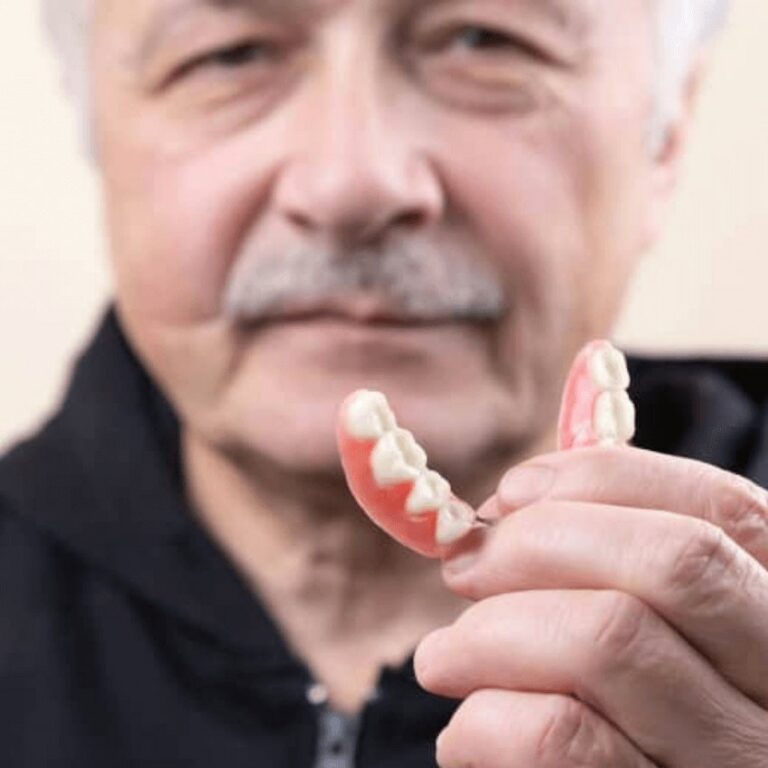
Full and partial dentures, including implant-supported options.

Care for gum disease and gum recession from our periodontal team.
Shore Side Dentistry has cared for Oakville families since 1990. Our four dentists, including a certified specialist in periodontics, work together in one office on Lakeshore Road East.
Our office at 345 Lakeshore Rd E #401 in downtown Oakville welcomes patients from across Halton, including Old Oakville, Glen Abbey, River Oaks, Joshua Creek and nearby Mississauga.
Our home neighbourhood in downtown Oakville, steps from Lakeshore Road shops and the waterfront.
A short drive along Lakeshore Road for families in Bronte and west Oakville.
An easy trip along the QEW or Lakeshore Road for patients coming from Burlington.
A straight drive south on Trafalgar Road for families in Milton.
Learn what affects gum graft cost, how the procedure works and what gum graft recovery looks like week by week, from our periodontal team in Oakville.

Comparing a dental implant vs bridge for a missing tooth: how each works, pros and cons, timing, cost factors and how our Oakville team helps you choose.