



Gum Graft Cost and Recovery: What to Expect in Oakville
Learn what affects gum graft cost, how the procedure works and what gum graft recovery looks like week by week, from our periodontal team in Oakville.
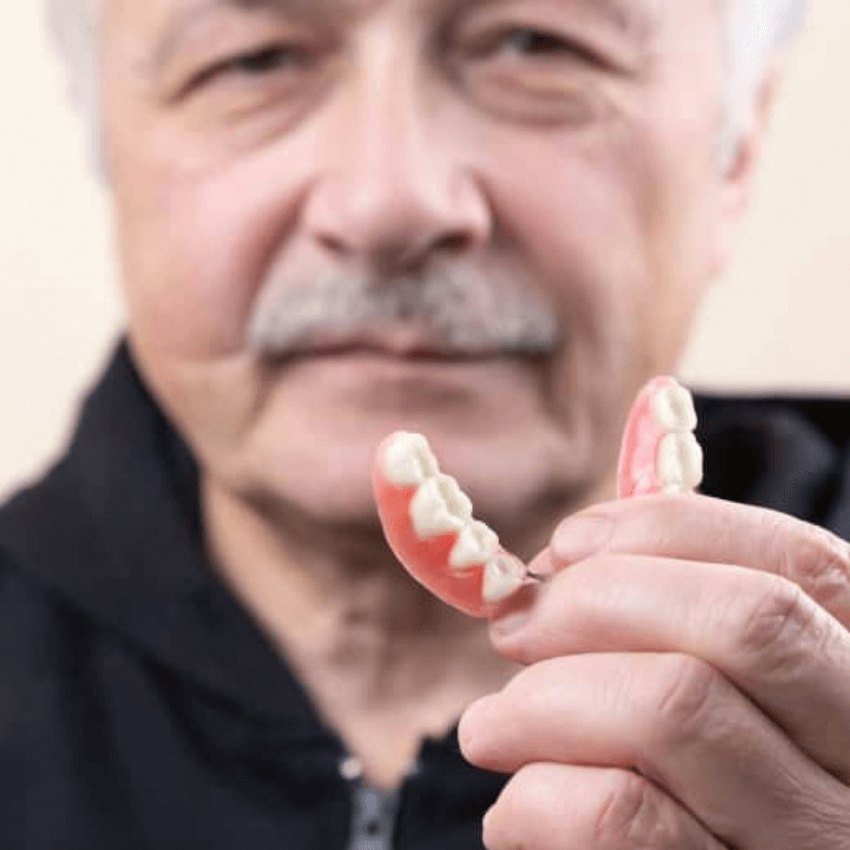
Traditional dentures rest on your gums and are held by suction, a close fit or clasps, so they can shift while you eat or speak. Implant supported dentures attach to small titanium posts placed in the jawbone, which usually makes them more stable and helps preserve the bone underneath. The right choice depends on your bone, gum health, general health, budget and goals.
A traditional denture is a removable appliance made of an acrylic base that looks like gum tissue, with artificial teeth set into it. There are two main types:
Dentures are a well-established, non-surgical way to restore appearance and function, and they remain a good option for many people. You can learn more on our dentures page.
The bone that holds your teeth (the alveolar ridge) is maintained partly by the forces passed through tooth roots when you chew. Once teeth are lost, that stimulation stops and the ridge gradually shrinks in height and width. As the ridge shrinks, a denture that once fit well becomes loose, needs relining or remaking, and the lower face can start to look shorter or more sunken.
A dental implant is a small titanium (or sometimes zirconia) post placed in the jawbone, where it acts like an artificial root. Over several months the bone bonds to the implant surface, a process called osseointegration. Once healed, the implants can anchor a denture. You can read more about the implants themselves on our dental implants page.
An overdenture looks much like a regular denture, but its underside has attachments that click onto matching fittings on the implants or onto a small bar connecting them. You remove it for cleaning and usually at night. Because the implants hold it in place, it typically moves much less than a conventional denture.
A fixed full-arch bridge is screwed or secured onto the implants and is not taken out at home. Only your dental team can remove it, usually for maintenance. It feels closer to natural teeth, but it generally requires more implants and more bone, and it costs more.
The number varies with the jaw, the bone available and the type of denture. In general terms, a lower overdenture often uses two to four implants, while a fixed bridge usually needs more. Upper dentures often need more implants than lower ones because the upper bone is typically softer. Your dentist will advise on the number that suits your situation after an examination and 3D imaging.
Many patients find that an implant supported denture feels more secure, with less rubbing and fewer sore spots, because the implants take much of the load instead of the gums alone. Adhesives are usually no longer needed.
Because the denture is anchored, you can usually bite and chew with more force and confidence. Many people find they can return to a wider range of foods.
A loose denture can click or shift when you speak, especially with sounds like “s” and “f”. An anchored denture is less likely to move, which often makes speaking feel more natural.
Implants do not decay, but the gum and bone around them can become inflamed, a condition called peri-implantitis. Daily cleaning and regular professional visits are important for keeping implants healthy over the long term.
Many adults who are missing most or all of their teeth can be considered. During your assessment, your dentist will check:
At Shore Side Dentistry, Dr. Tina Kokosis, our certified specialist in periodontics, can assess the gums and supporting bone and help plan implant placement, especially when gum disease or bone loss is a concern.
If years without teeth have caused the ridge to shrink, bone grafting may be recommended to rebuild the area before or at the same time as implant placement. In the upper back jaw, a sinus lift can add bone below the sinus. Grafting adds healing time and cost, so it is discussed in detail before treatment.
Every plan is different, but implant dentures usually follow these stages:
From start to finish, many patients complete treatment over several months to a year, depending on healing and whether grafting is required.
As a general range, not a quote, a single dental implant with a crown costs about $800 to more than $5,000. A full-arch implant denture is a different kind of treatment, and its cost depends on the number of implants and the type of denture (snap-on overdenture or fixed bridge). A consultation is needed before we can give you an accurate quote. Factors that affect the fee include:
Dental insurance may cover part of the treatment depending on your plan. Eligible seniors may also want to look into the Ontario Seniors Dental Care Program or the federal Canadian Dental Care Plan; check current eligibility and coverage details directly with each program.
Sometimes, yes. If your current denture fits well, the teeth are in good condition and the bite is correct, your dentist may be able to modify it by adding attachments that snap onto new implants. If the denture is worn, loose or poorly fitting, a new one is usually recommended so the final result works well with the implants. Your dentist will check this at your consultation.
Age alone is not usually a barrier to implants. Many older adults are good candidates if their general health allows minor oral surgery and healing. For seniors, the benefits of a stable denture can be practical: easier chewing can support a varied diet, and a secure fit can make social meals more comfortable. A snap-on overdenture is often a good fit because it is easier to clean than a fixed bridge, which matters for anyone with limited hand dexterity.
Dr. Peter Taylor, our principal dentist, focuses on restorative, implant and prosthetic dentistry and is a Fellow of the Canadian Academy of Restorative Dentistry and Prosthodontics. Learn more about Dr. Taylor and our restorative and implant dentistry services.
Our office is on Lakeshore Road East in downtown Oakville, a short drive from Old Oakville, Bronte Village and Glen Abbey, and easy to reach from Burlington and Mississauga via the QEW. We have served Oakville since 1990 and open at 7 a.m. on weekdays.
They are usually more stable and help preserve jawbone, but they require surgery, healing time and a higher investment. Regular dentures remain a reasonable choice for many people. Your dentist will explain which option suits your bone, health and goals.
With good home care and regular checkups, implants can last many years. The denture itself wears over time and may need relining, new attachment inserts or replacement.
Implant placement is done with local anaesthetic, so the area is numbed and most people feel pressure rather than pain during the procedure. Afterward, most people have some soreness and swelling for a few days that is usually managed with over-the-counter pain relievers. Nitrous oxide sedation is available for anxious patients.
Dentists usually recommend removing an overdenture at night so the gums can rest and the denture and implants can be cleaned.
The cost depends on the number of implants, the type of denture and whether grafting or extractions are needed. As a general range, a single implant with a crown is about $800 to more than $5,000, and a full-arch plan is quoted after a consultation.
Wondering whether implant dentures are right for you? We are happy to talk through your options. Book a visit or call us at 905-842-2364.
Please note: This article is general information to help you understand common dental topics. It is not a diagnosis or a substitute for an exam. Every mouth is different, so please book a visit or call 905-842-2364 so one of our dentists can look at your situation and talk through your options.
Full and partial dentures, including implant-supported options.

A long-term way to replace a missing tooth.
Implants, crowns, bridges and dentures planned and restored in one office.
Shore Side Dentistry has cared for Oakville families since 1990. Our four dentists, including a certified specialist in periodontics, work together in one office on Lakeshore Road East.
Our office at 345 Lakeshore Rd E #401 in downtown Oakville welcomes patients from across Halton, including Old Oakville, Glen Abbey, River Oaks, Joshua Creek and nearby Mississauga.
Our home neighbourhood in downtown Oakville, steps from Lakeshore Road shops and the waterfront.
A short drive along Lakeshore Road for families in Bronte and west Oakville.
An easy trip along the QEW or Lakeshore Road for patients coming from Burlington.
A straight drive south on Trafalgar Road for families in Milton.
Learn what affects gum graft cost, how the procedure works and what gum graft recovery looks like week by week, from our periodontal team in Oakville.

Comparing a dental implant vs bridge for a missing tooth: how each works, pros and cons, timing, cost factors and how our Oakville team helps you choose.